Science for practice
A Test of Physical Work Capacity for Weightlifters
English summary of Tyazhelaya Atletika. Ezhegodnik 1982 (Moscow: Fizkultura i Sport, 1982), pp. 39–41: the text is paraphrased, not translated; data tables are given in full with English labels; figures are the original images.
Rationale
Sports-medicine tests of work capacity (maximal aerobic power, PWC170, Harvard step test) are common in cyclic sports but little used in weightlifting, their work being unspecific. The authors built a weightlifting-specific PWC170: the power at which heart rate reaches 170 beats/min, the start of the optimal zone of cardiovascular function. Heart rate rises linearly with power between 110 and 170 beats/min; the higher the power at 170, the higher the capacity. The WHO recommends PWC170; cycle-ergometer (Karpman et al.) and running versions exist. National coach A. S. Prilepin and S. I. Lelikov (VNIIFK) helped develop the test.
Protocol
- As in Sjöstrand's test, two loads separated by 3 min rest; exercise and load steps chosen by experiment, the number of lifts by heart-rate stabilisation.
- Each load: 9 squat cleans in 3 min, one every 20 s (3–5 s lifting and lowering, 15–17 s rest).
- First load 30 or 40%, second 70 or 80% of the best clean and jerk.
- Heart rate from ECG (lead DS) in each rest interval; lift height h measured with a tape from the bar to the jugular notch of the sternum.
Calculating power
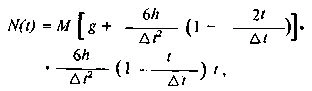
Power peaks during a lift and is zero between lifts, so the mean power per work cycle was derived by mathematical modelling. The work comprises lifting the bar and raising the lifter's own centre of gravity out of the squat. Instantaneous power is zero at the start and end of a lift and peaks at about Δt/2. Mean lifting power is very large in ergometric units: with M = 100 kg, h = 1 m and Δt = 1.5 s it is 4000 kGm/min.
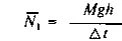
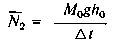
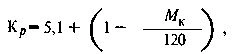
A computer model of muscle-capillary gas exchange (Krogh 1932; Amosov et al.), in which oxygen demand exceeding supply reflexly raises muscle blood flow and heart rate, showed that by the end of the series (20 s spacing) heart rate stabilises as with constant power N = Kp(A1 + A2) (equation 6), where A1 and A2 are the work per lift of the bar and of the body (N̄1Δt, N̄2Δt). The effective powers N1, N2 of the two series and heart rates f1, f2 give N170 by linear interpolation.




Results
- In 134 top-level lifters specific work capacity ranged from 643 to 2683 kGm/min, mainly because of body size; mean 1313.4 ± 34.1 kGm/min, close to cycle-ergometer values reported by Tornvall (1177 ± 211), Sjöstrand (1213), Rous et al. (1248.86 ± 54.50) and Karpman et al. (1148).
- Assessment compares an athlete's individual trend with the norms for his class (table); the data were used in preparing athletes for major competitions.
- Trials (Karpman et al., 1981) show the test meets current requirements and characterises a lifter's special work capacity accurately.
Table. Physical work capacity of weightlifters by weight class (means)
| Weight class, kg | Absolute work capacity, kGm/min, M ± m | Relative work capacity, kGm/min/kg, M ± m |
| 52.0 | 853.2 ± 31.4 | 15.3 ± 0.5 |
| 56.0 | 1160.3 ± 56.8 | 19.3 ± 0.9 |
| 60.0 | 1165.* ± 41.9 | 17.8 ± 0.6 |
| 67.5 | 1247.2 ± 137.1 | 16.9 ± 1.7 |
| 75.0 | 1360.5 ± 81.3 | 17.6 ± 0.9 |
| 82.5 | 1348.2 ± 119.6 | 16.0 ± 1.7 |
| 90.0 | 1428.9 ± 91.3 | 15.8 ± 0.9 |
| 100.0 | 1459.7 ± 90.8 | 15.4 ± 1.0 |
| 110.0 | 1672.5 ± 109.8 | 15.3 ± 0.9 |
| > 110.0 | 1716.8 ± 129.0 | 12.9 ± 0.8 |
* Printed “1165,”: the decimal digit is missing.